
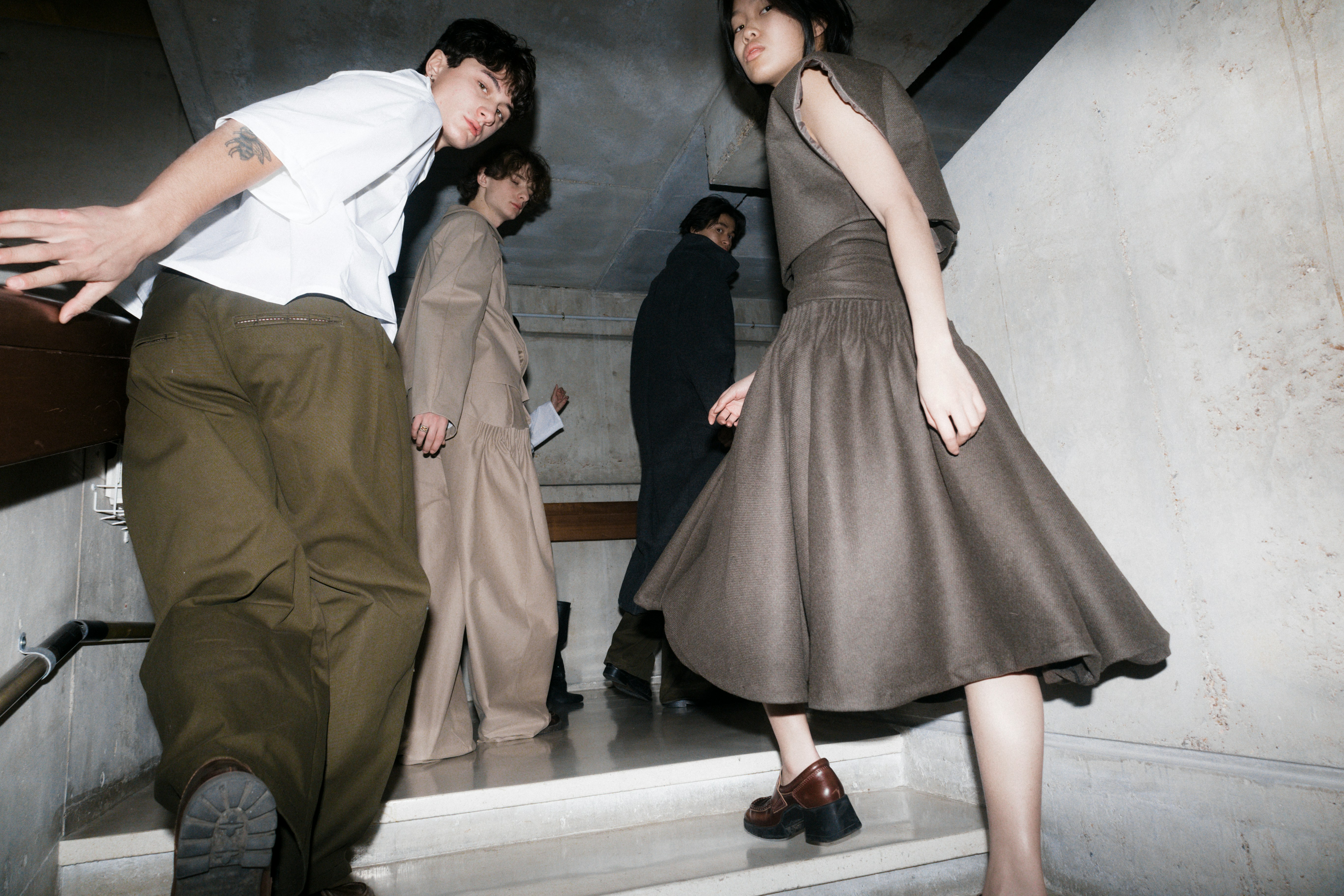
twenty-seven names returned to New Zealand Fashion Week this week after six years away, celebrating 20 years since two best friends started making clothes from their Wellington flat. In a fashion industry built around whatever comes next, simply still being here might be the more interesting achievement.
At 2pm on Tuesday, twenty-seven names returned to New Zealand Fashion Week for the first time in six years. The slot at Shed 10 was officially a 20th-anniversary show, although there is another way of describing it: Anjali Burnett and Rachel Easting started a fashion company in their early 20s and somehow still have one two decades later.
They began in a Wellington flat in 2006 after studying fashion and fine art, making tops for themselves before friends started asking for their own. Burnett and Easting had known each other since primary school, and the label that followed was eventually named after the 27 people who helped them get it started.
Fashion tends to make the beginning look like the exciting bit. Someone graduates, makes six extraordinary outfits, gets photographed at a runway show and suddenly becomes a new name everyone needs to know, which is great until you remember a clothing company also has to exist on the Wednesday after everyone stops talking about it.
Twenty years contains a lot of Wednesdays.
During that time, twenty-seven names has kept an unusually stubborn part of its original model intact. Its clothes are still made in New Zealand, with production in Wellington and Auckland, and the brand publishes information about where its fabrics and trims come from. It says it favours natural fibres and uses deadstock for many of its plain fabrics, while its current collections are still sold as proudly made in Aotearoa.
That decision is easy to admire and considerably harder to run as a business. New Zealand is a small market, local manufacturing costs more, global fashion companies can produce at a scale an independent Wellington label never will, and customers somehow want clothes to be beautifully made, ethically produced and not too expensive all at once.
The difficult part became visible earlier this year when twenty-seven names decided not to renew the lease on its Newmarket store after a decade there. The label said it was sad to leave but did not want to stretch the store beyond what made sense, keeping its Wellington flagship and online business while stepping away from physical retail in Auckland.
There is something refreshingly grown-up about celebrating 20 years in the same year you close a shop. Business profiles often clean up the middle, as though longevity is a straight line of bigger stores, more employees and increasingly impressive graphs, when surviving for long enough usually means recognising which things no longer work and being willing to stop doing them.
That is especially true in fashion, where success and scale are too easily treated as the same thing. A company can open five shops and disappear three years later, while another can stay small, make less noise and still be cutting fabric two decades after the first collection left somebody’s living room.
Burnett and Easting have also managed to keep a recognisable personality around the label while doing it. twenty-seven names still feels colourful, funny and slightly odd in a fashion world that can become extremely serious about beige, with art references, custom prints and the same founders visibly involved in what comes out. WellingtonNZ describes the business as still run by the two best friends, with their Ghuznee Street store just down the road from the workroom.
Their return fits an interesting moment for New Zealand Fashion Week itself. The event is back at Shed 10 from August 17 to 22 with government support from the Events Boost Fund for the first time in 15 years, alongside established labels, graduates and newer designers trying to build whatever the next 20 years of New Zealand fashion will look like.
There will always be a place for the new name with an incredible first collection. Fashion needs that excitement, and nobody wants a runway week built entirely around sensible balance sheets and excellent inventory management.
But there is another kind of aspiration sitting on the schedule this year. It is a company started by two friends at 21 and 22, still owned in New Zealand, still making clothes here and still able to put on a show 20 years later.
The runway lasts a few minutes. Keeping the lights on until the next one takes considerably longer.
Share
Copy link