


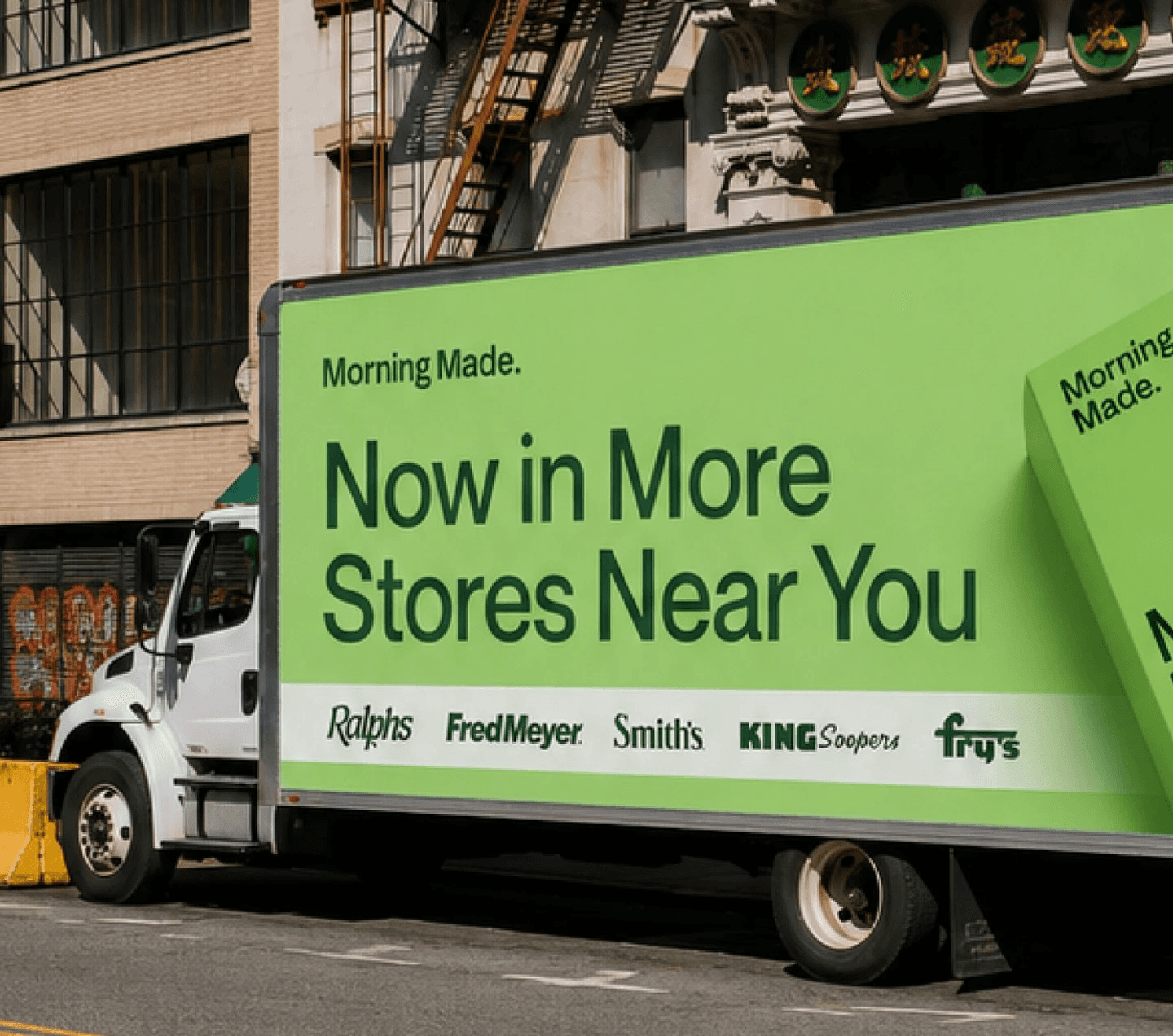
Brad Matthews is 25, leads a team of 25 and says Morning Made now reaches around 30,000 retail doors across New Zealand, Australia and the United States. What began as an alternative to his morning coffee has become a much bigger bet on how people want to start their day.
Brad Matthews still finds it strange walking into a supermarket in an American city he has never visited and seeing Morning Made sitting on the shelf. Sometimes it is somewhere he barely knew existed before the business took him there, yet the bright pouches are already waiting for him, thousands of kilometres from where the idea began in New Zealand.
“Seeing our product everywhere is insane,” he says. “It’s something you can’t really wrap your head around.” Matthews is 25, has a team of 25 and says Morning Made now reaches around 30,000 retail doors across New Zealand, Australia and the United States, which is a fairly absurd amount of scale for something that began with him simply wanting to feel better in the morning.
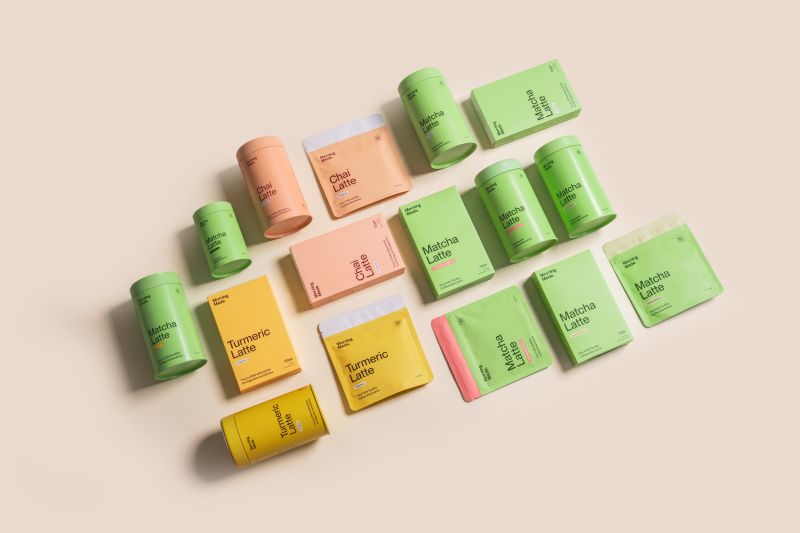
Pictured - Morning Made Range
The idea arrived in 2019 while Matthews was working at Zero Edge, his first proper professional job after years of side projects and small ventures. He had become fascinated by a new generation of consumer companies that felt quicker, more culturally aware and more interesting than many of the brands already sitting on supermarket shelves.
He had also become a coffee drinker. New Zealand and Australian coffee culture got him quickly, but the amount of caffeine did not always agree with him, so he started looking for something that could still give the morning a little lift without feeling quite so intense.
“There has to be an opportunity here for something with caffeine, but not so much that you get the jitters and anxiety,” he remembers thinking. That thought eventually became Matcha Made, an early direct-to-consumer business built around making matcha easier to incorporate into an everyday morning.
There was no grand plan for Walmart, Coles or America at that point. Matthews was interested in a fairly simple behaviour: people loved the ritual of coffee, but a growing number were starting to look for other ways to get through the morning.
The first real indication that this might become more than an online wellness product came from cafés. Matcha Made began appearing on menus and shelves in coffee shops, which Matthews found particularly interesting because cafés were fundamentally built around selling coffee.
“When you see it in a café, you’re like, ‘Wow, these are the tastemakers. This is where trends start,’” he says. For Matthews, seeing matcha move into that environment suggested something larger was happening, with customers becoming more open to alternatives without wanting to give up the ritual around a morning drink.
That ability to notice what people were already doing became central to how the company grew.
One of Morning Made’s biggest flavours came directly from watching customers make strawberry matcha on TikTok. Instead of treating those videos as a passing social trend, the team saw a product opportunity and moved quickly.

“We were like, ‘Well, how do we just copy what consumers are doing?’” Matthews says. Strawberry went on to become one of the company’s hero products alongside vanilla, reinforcing an idea he still returns to when talking about how Morning Made develops new products.
“You have to listen to customers. You have to see what they’re doing, how they’re consuming, and then do that for them.”
It is a refreshingly simple way of describing innovation. Rather than sitting in a room deciding what people should want next, Morning Made watches the café menu, the customer at home and the flavour suddenly appearing everywhere online, then works out where it can make that behaviour easier.
As the company grew, Matthews also began thinking about Morning Made differently. What started as a matcha business was increasingly becoming, in his words, a distribution business, with major retailers giving the company access to customers at a scale ecommerce alone never could.
That created the next question. If Morning Made could build strong relationships with retailers and earn space on shelves across several countries, why should the entire company be limited to matcha?
“When you’re in meetings, you can bring innovations in matcha, but retailers aren’t going to have much more than five or ten matcha products on shelf,” Matthews says. “Typically one brand might have three to five units.”
The answer became Morning Made.
Rather than abandoning what the original company stood for, Matthews saw the new name as making the idea larger. Matcha remained important, but the company could now move naturally into chai, turmeric and other products built around the same morning occasion.
The mission became less about one ingredient and more about helping people make the first part of their day feel a little better. Matthews calls the transition a refresh rather than a rebrand, which probably says something about how he viewed it internally: Matcha Made had not become irrelevant, Morning Made had simply grown beyond the boundaries of the original name.
That broader thinking has taken the company into some enormous retailers.
Morning Made has launched into Walmart, Coles and other major stores across its three markets, giving the brand the kind of physical distribution that can make a young consumer company suddenly feel much larger than its age.
Matthews loves retail partly because of that reach. Once the operational side is working, he says, few channels can put a product in front of as many customers as quickly.
“Once you figure it out and get your systems and processes right, retail is a great way to get huge distribution and volume overnight,” he says.
The United States has become particularly important. Matthews believes the sheer size of the market creates an opportunity unlike anything available closer to home, and if he were beginning the company today, he says he would be tempted to focus heavily on America from the outset.
That does not make New Zealand irrelevant to the story. Morning Made was built here, and the instincts behind it are still recognisably Kiwi: start relatively small, move quickly, do not make too much noise about yourself and then occasionally realise the thing you made has somehow ended up in a supermarket on the other side of the world.
What Matthews has become more conscious of is focus. Growing across New Zealand, Australia and the United States has taught him how much attention every new market requires, and he now thinks carefully about where Morning Made can go deepest rather than simply where another opportunity might appear.
“If you do two things, you have to be okay knowing that those two things won’t go as deep or as far as doing one thing incredibly well,” he says.
That thinking extends beyond geography. Morning Made has reached the point where Matthews no longer needs, or wants, to be the person making every decision himself.
The business has grown from him doing almost everything, through working with freelancers, to a team of 25 with people specialising across different parts of the company. Matthews talks about that development with almost as much enthusiasm as he does the retail footprint.
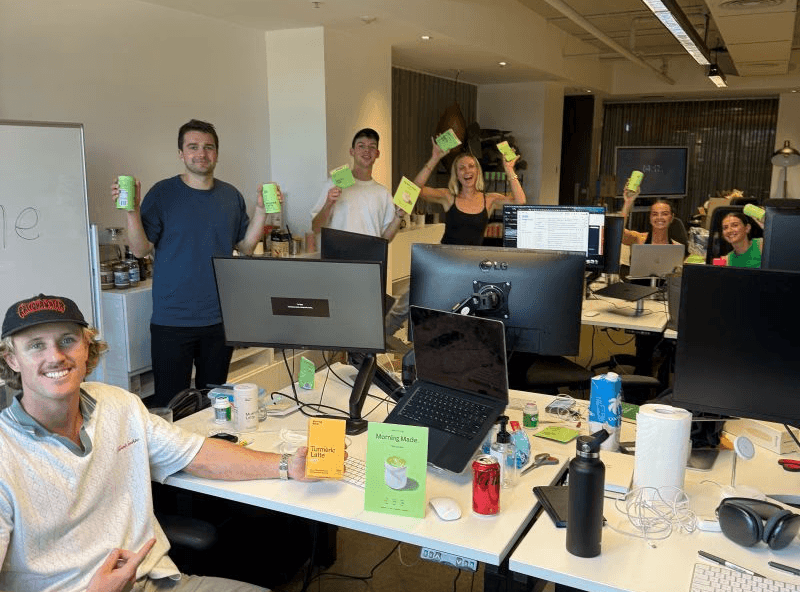
Pictured - Morning Made team in Sydney
“Being 25 with a team of 25 is pretty outrageous,” he says. “Having real systems, having people that are experts, smarter than you, having people that can make decisions better than you, that’s hard to believe.”
There is something particularly interesting about building a team of that size while still being the same age as plenty of people figuring out what they want their first proper job to be. Matthews has had to learn how to become a founder and a leader at roughly the same speed Morning Made has learnt how to become an international company.
He talks openly about becoming more resilient and more comfortable with the fact that nobody has every answer. The bigger the company becomes, the less useful it is to pretend otherwise.
“No one knows everything,” he says. “We’re all here on earth just trying to figure it out.”
For all the scale, there is still a slightly surreal quality to the way Matthews talks about Morning Made. He does not sound like somebody who believes the outcome was inevitable, or who has retroactively arranged every decision into a perfectly straight line.
He talks about hard work, but also timing. Matcha began moving quickly into the mainstream at the same moment consumers were becoming more interested in alternatives to coffee. Social media allowed flavours and café habits to travel faster, retailers began giving the category more room and Morning Made happened to be building directly into that movement.
“You can work really hard, and if you get lucky with timing and trends, your dreams and hopes can actually happen,” he says.
The important bit is that Morning Made kept moving with it.
A company that began around matcha became a wider morning brand. A direct-to-consumer product moved into cafés, then major retail. A founder working largely by himself became the leader of a 25-person team operating across three countries.
Matthews is proud of what that team has built, but he is also deliberately reluctant to treat the current version as the finished one. Morning Made has an internal mantra that assumes whatever looks impressive today will eventually be overtaken by something better.
“The stuff we’re doing now is going to look really shitty in the future,” Matthews says. “We’re going to do our best at everything now, but in six months or a year or five years, we’re going to look back and say, ‘That was so crazy that we thought that was how good things were.’”
It sounds harsh until you hear the optimism underneath it. Matthews is not dismissing what Morning Made has built; he expects the company to keep getting good enough that today’s version eventually looks small.
For someone who is already finding his products in American cities he has never visited at 25, there is something pretty exciting about wondering what that future version might look like.
Share
Copy link


