

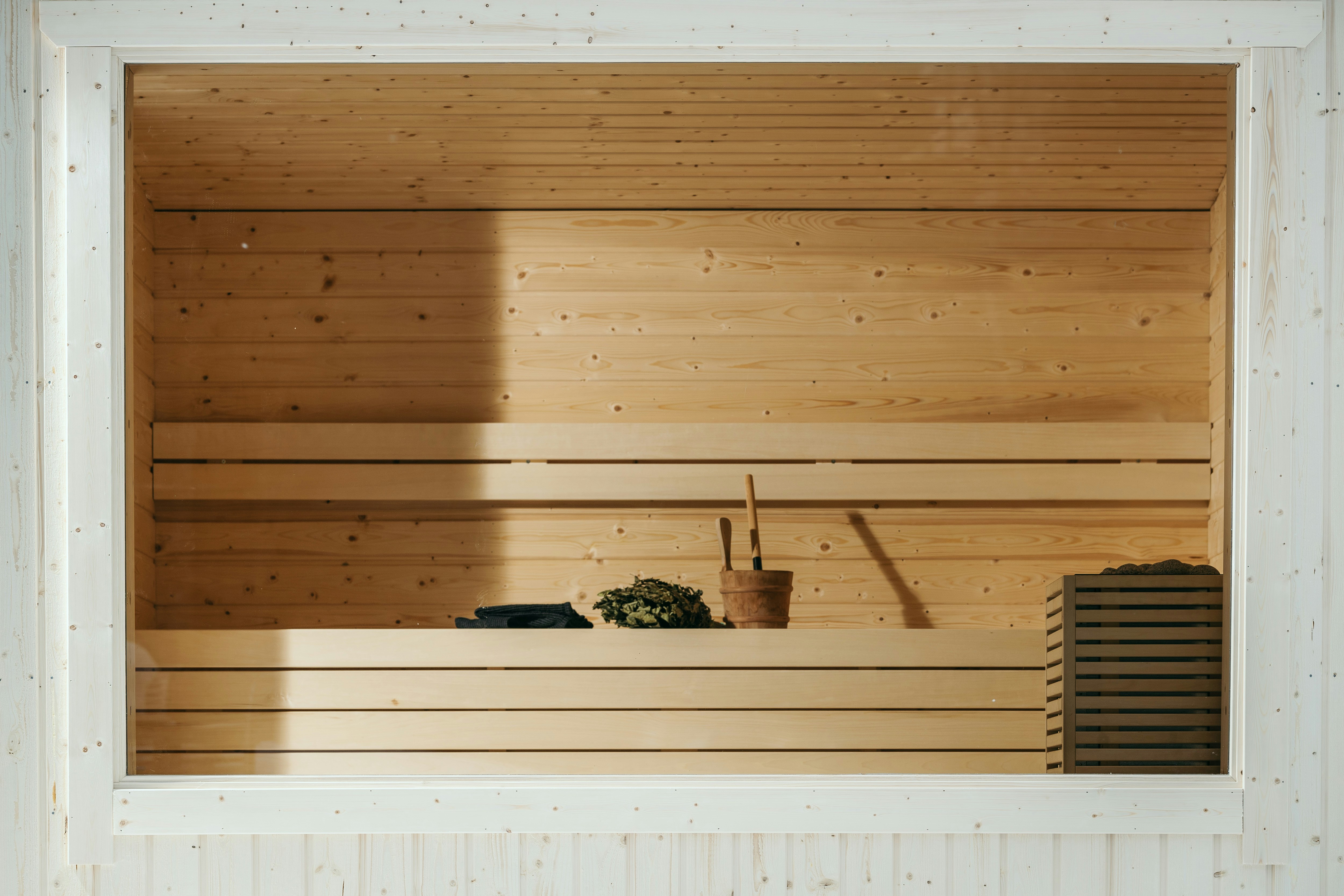
An east London neighbourhood is preparing to open a community sauna heated by food waste from nearby homes. It sounds slightly ridiculous, which may be exactly why it makes more sense than most climate projects.
In Poplar, east London, people’s discarded food is being fed into a small anaerobic digester, turned into methane and used to heat a community sauna. The system is still being tested, with the full launch expected later this year, but the plan is wonderfully straightforward: local leftovers go in and a hot room for local people comes out.
The sauna sits at R-Urban Poplar, an ecology hub that has been slowly assembled on what used to be an unused car park and a line of empty garages. Since moving there in 2017, the project has added family allotments, communal gardens, a kitchen, a classroom, a tool library, workshops, wildlife habitats and a small mushroom farm. It feels less like a polished sustainability showcase and more like a group of people kept having useful ideas, then found somewhere to put them.
The sauna is the idea people will remember because it does not ask anyone to be especially virtuous. You bring over the food scraps you were going to throw away, then at some point you get to sit in a warm room with other people. There is no lecture waiting at the end and nobody has to buy a beige water bottle to prove they understood the message.
Climate projects are often presented as a series of things normal people will need to give up, which is probably not the best way to make them popular. Drive less, fly less, eat differently, replace this, stop doing that, and somehow maintain a cheerful expression while being told your recycling is still wrong. Some of those changes are necessary, but the whole conversation can become so joyless that you begin to understand why people quietly stop listening.
R-Urban offers a friendlier version of the future, where waste becomes something useful and the useful thing also happens to be enjoyable. The technology is important, but the project has not treated technology as the main character. The digester sits alongside food growing, shared kitchens, repair services and actual places where neighbours can meet, because a clever machine is not much of a community on its own.
That matters in Tower Hamlets, where outdoor space is limited and many families live in flats. The wider programme has been working across the borough to support community-led food projects, including small growing plots and markets selling affordable produce, while giving people a reason to spend time together that is more natural than being invited to discuss “community resilience” in a fluorescent council room.
There is a practical question underneath all of this, which is whether small circular projects can eventually pay for themselves rather than disappearing when a grant runs out. The team believes the sauna could help because it creates something people may pay a modest amount to use, allowing the energy produced from local waste to support the wider site. It is not just an environmental demonstration sitting behind a rope. It is meant to work.
Nobody needs to pretend a neighbourhood sauna will solve the climate crisis. It will not, and loading that kind of expectation onto every good local idea is one of the quickest ways to make everything sound exhausting. What it might do is show people, in a way they can physically feel, what a circular system looks like when it leaves the diagram and enters ordinary life.
Later this year, if the testing works, neighbours will sit in a sauna heated by the food they nearly threw away. Honestly, that sounds like a much better climate campaign than another reusable tote bag.
Share
Copy link