
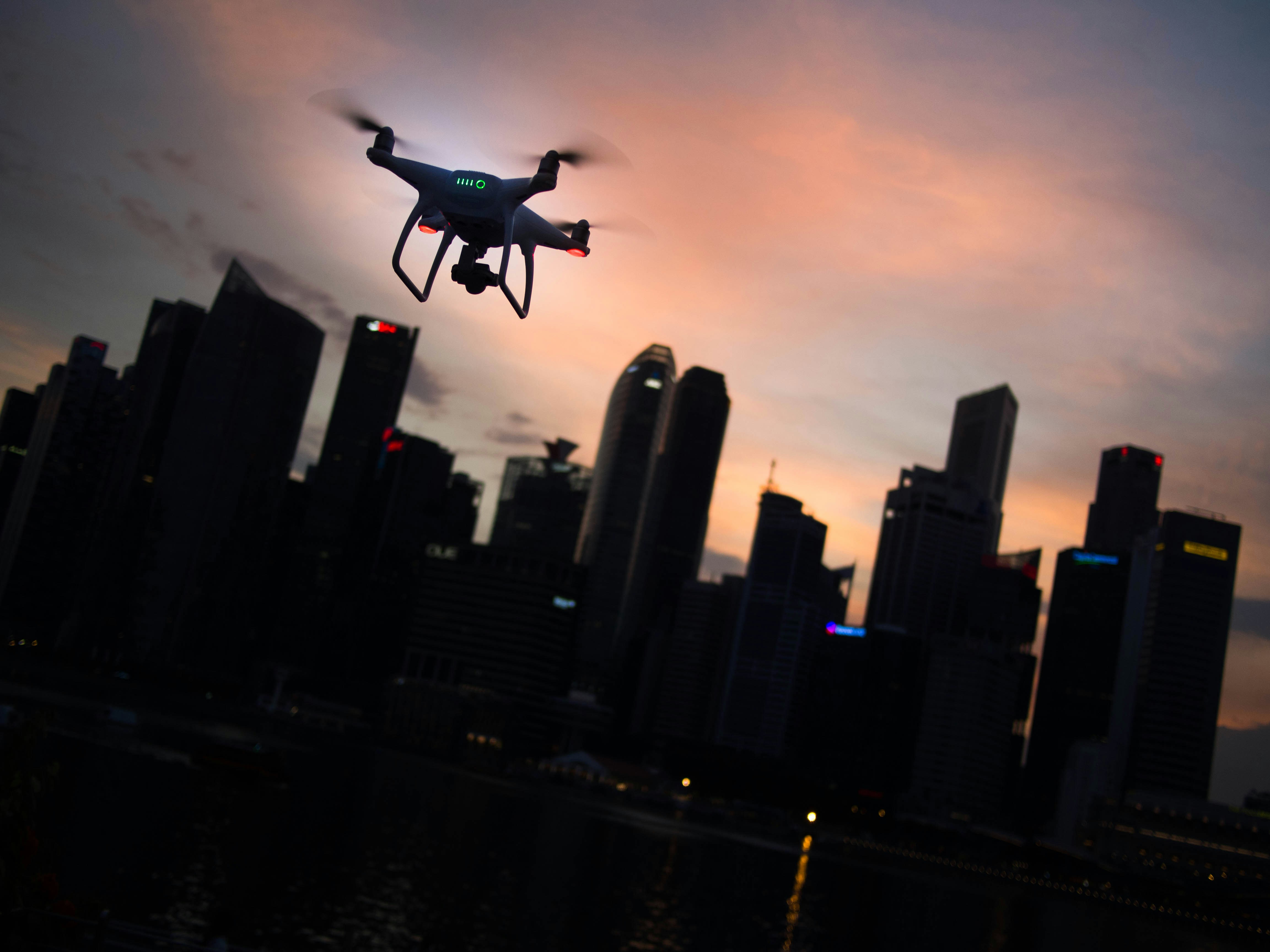
While gridlocked traffic slows paramedics to a crawl, a network of autonomous drones is buzzing across Sydney skies to drop defibrillators into suburban backyards. It turns out the next phase of emergency medicine requires you to play paramedic.
There is a specific, helpless terror that belongs to waiting for an ambulance. When someone collapses next to you and stops breathing, time stops operating on a human scale. Every second feels like a lifetime. You dial the emergency line, you give the operator your address, and then you wait. You listen for sirens. But in a sprawling, traffic clogged city, the grim reality is that a traditional ambulance is heavy, bound by roads, and trapped behind a long line of commuter cars.
When a heart goes into cardiac arrest, the clock ticks with mathematical brutality. Every single minute that passes without a shock from a defibrillator reduces the chance of survival by roughly ten percent. By the time a crew manages to navigate the arterial gridlock of a major metropolitan center, the window has usually closed.
This structural failure is why emergency services are turning to a solution that sounds entirely detached from standard medical practice. Rather than building more roads or buying more vans, health networks are establishing automated drone dispatch systems designed to beat paramedics to the scene. The premise is beautifully simple, if the roads are blocked, use the sky.
The operation functions with remarkably little human friction. When an emergency call comes in and the operator flags a suspected cardiac arrest, a signal is simultaneously routed to a network of regional drone hubs. Within two minutes, an autonomous quadcopter takes off from a specialized hangar, climbs above the power lines, and charts a direct path to the caller's GPS coordinates at eighty kilometers an hour.
When it arrives, the drone does not land. Instead, it hovers roughly thirty meters above the pavement or the lawn and uses a mechanized winch to lower a bright red, automated external defibrillator directly to the ground. It is an extraordinary feat of logistics that routinely beats traditional road crews to the scene by several critical minutes.
But the arrival of the machine is only half the battle. The true tension of this network is not technological, it is human. A drone can drop a piece of high tech medical equipment into your driveway with military precision, but it cannot kneel down, open the box, and press the buttons.
This model forces a massive psychological shift in how we think about emergency healthcare. For decades, the public has been conditioned to treat medicine as a highly institutional, hands off service. You call the experts, they arrive in uniform, and they handle the crisis while you step back. The drone ambulance system completely upends that dynamic. It turns an ordinary, panicked bystander into an immediate, active participant in a high stakes medical intervention.
The moment the machine drops from the sky, the emergency phone operator becomes a remote coach. They have to talk a terrified family member or a random passerby through the process of tearing open the pads, sticking them to a stranger's chest, and clearing the area before a shock fires.
It is a messy, vulnerable form of public design. Early simulation data shows that while people are generally thrilled to see the drone arrive, the actual transition from holding a phone to operating a medical device is fraught with hesitation. People get scared. They worry they will do it wrong, or that they might make things worse, despite the fact that modern defibrillators are entirely automated and will literally refuse to shock a patient if they do not detect a lethal heart rhythm.
This is the real insight behind the rollout. The future of survival in our cities is no longer a question of better hardware or faster processing speeds. We have already solved the physics of flying a payload across a city in record time. The actual bottleneck is cultural. It relies entirely on our collective willingness to overcome our own panic, step out onto the grass, and pick up the tool that dropped from the air.
Share
Copy link