Creative people have spent the past year drawing hard lines around AI, then quietly stepping over them when the deadline gets ugly. The real question is not whether the tools belong in the work, but who gets paid, credited and replaced once they do.
There is something deeply funny about the way creative people talk about AI now, mostly because everyone seems to have drawn the moral line exactly one centimetre past whatever they are already doing.
The designer who would never “let a machine make the work” is using it to mock up concepts before the client meeting. The strategist who thinks generative AI is flattening culture is quietly using it to summarise research. The writer who rolls their eyes at AI copy is still asking it for headline options when the deadline has become less of a deadline and more of a threat. The musician who hates synthetic vocals is still working inside production software that can clean, stretch, correct and manipulate sound in ways that would have looked like witchcraft to anyone recording demos on a laptop fifteen years ago.
Nobody wants to admit they are using it, because admitting it means having the conversation properly, and the conversation properly is much harder than saying “AI bad” in public while using it like a slightly cursed intern in private.
That is where creative work is now. Not in some clean moral war between humans and machines, but in a much messier, more embarrassing middle place where the tools are useful, the economics are ugly, the ethics are unresolved, and everyone is trying to work out how much of their process they can automate before the thing they make stops feeling like theirs.
In Aotearoa, the conversation has already moved from novelty to infrastructure. The AI and Creativity Summit 2026 framed the issue around how AI is reshaping creative industries in New Zealand and globally, from storytelling and misinformation to creative rights, trust and what happens when new tools start changing old jobs faster than anyone can write rules for them.
The music industry has been one of the first creative sectors to put proper numbers around the dread. APRA AMCOS’ AI and Music report found that by 2028, 23 percent of music creators’ revenues could be at risk due to generative AI, while 54 percent of surveyed songwriters and composers agreed AI could assist the human creative process. That is the contradiction sitting in the middle of the room, refusing to behave. More than half can see the creative use case. Most can also see the income hit coming.
In other words, artists are not necessarily scared because the tool is useless. They are scared because it is useful enough to become dangerous.
This is where the standard AI debate usually gets stupid. One side talks as if every creative job is about to be replaced by a prompt box, which feels dramatic until you remember how bad most prompted work still is when nobody with taste is steering it. The other side talks as if artists are simply afraid of progress, which is convenient if your business model depends on treating other people’s work as free training material and calling the result innovation.
Both arguments miss the texture of how creative work actually happens. A song is not just an output. A photograph is not just an image. A campaign is not just a deck. Creative work is taste, memory, reference, timing, rejection, instinct, a conversation with the wrong person at the right time, the line you cut at 2am, the thing you almost made before realising it was too obvious. It is not mystical, exactly, but it is also not just content arriving at the end of a machine.
AI is very good at making versions of things. That is part of the problem. Versions are useful. Versions are also the fastest way to flood the world with competent nothing.
The creative industries have always had their shortcuts, cheats, templates and machines. No serious person thinks every piece of work needs to be carved by hand while someone suffers nobly for the craft. Cameras changed painting. Sampling changed music. Desktop publishing changed design. TikTok changed the speed at which taste becomes exhausted. The question has never been whether tools should exist. The question is what they do to the people using them, the people being copied by them, and the culture that has to live with the results.
The difference with AI is scale. It does not just change the tool in the hand of the creator. It changes the market around the creator. It can generate the placeholder track, the stock image, the first draft, the moodboard, the fake voice, the fake person, the fake room, the fake campaign, the fake everything. It can make bad work faster, decent work cheaper, and good work harder to identify in a feed full of synthetic confidence.
For some people, that will be useful. A tiny studio can mock up ideas faster. A student can prototype something they could not afford to produce. A filmmaker can test a treatment before finding money. A designer can explore visual directions without waiting three days for a blank page to become less terrifying. Used well, AI can shorten the distance between instinct and execution.
The problem is that the same technology that helps the small operator move faster also gives larger companies a reason to ask why the small operator was needed at all.
That is the bit people feel but do not always say cleanly. AI is sold to creatives as liberation, but often sold to businesses as cost reduction. One pitch says “make more with less friction.” The other says “make more with fewer people.” Those are not the same sentence, even when they are wearing the same software demo.
Maybe the more useful line is not AI versus no AI. It is whether AI is being used to support a human point of view or replace the need for one.
If the tool helps a person get closer to the thing they are trying to say, maybe that is a tool. If the tool is being used to avoid paying, crediting, hiring or listening to people, maybe that is something else. If the work has no point of view beyond “this was possible to generate,” then the problem is not that AI made it. The problem is that nobody had anything to say in the first place.
The most boring creative work of the next decade will not be made by machines. It will be made by people using machines to avoid making decisions.
That is what AI cannot fix. It can make images, sentences, melodies, edits, layouts and options. It can produce a lot of things that look finished from a distance. But it cannot care whether the thing should exist. It cannot know which mistake is worth keeping. It cannot understand why a rough vocal take feels better than the clean one, or why a slightly wrong photograph has more life in it, or why a line that breaks the rhythm is the line that makes the piece work.
People do.
For now, the industry is stuck in the awkward phase. Publicly ethical, privately experimental. Morally certain until the deadline moves. Furious about theft, curious about speed, worried about money, and quietly aware that the old world is not coming back just because the new one is badly behaved.
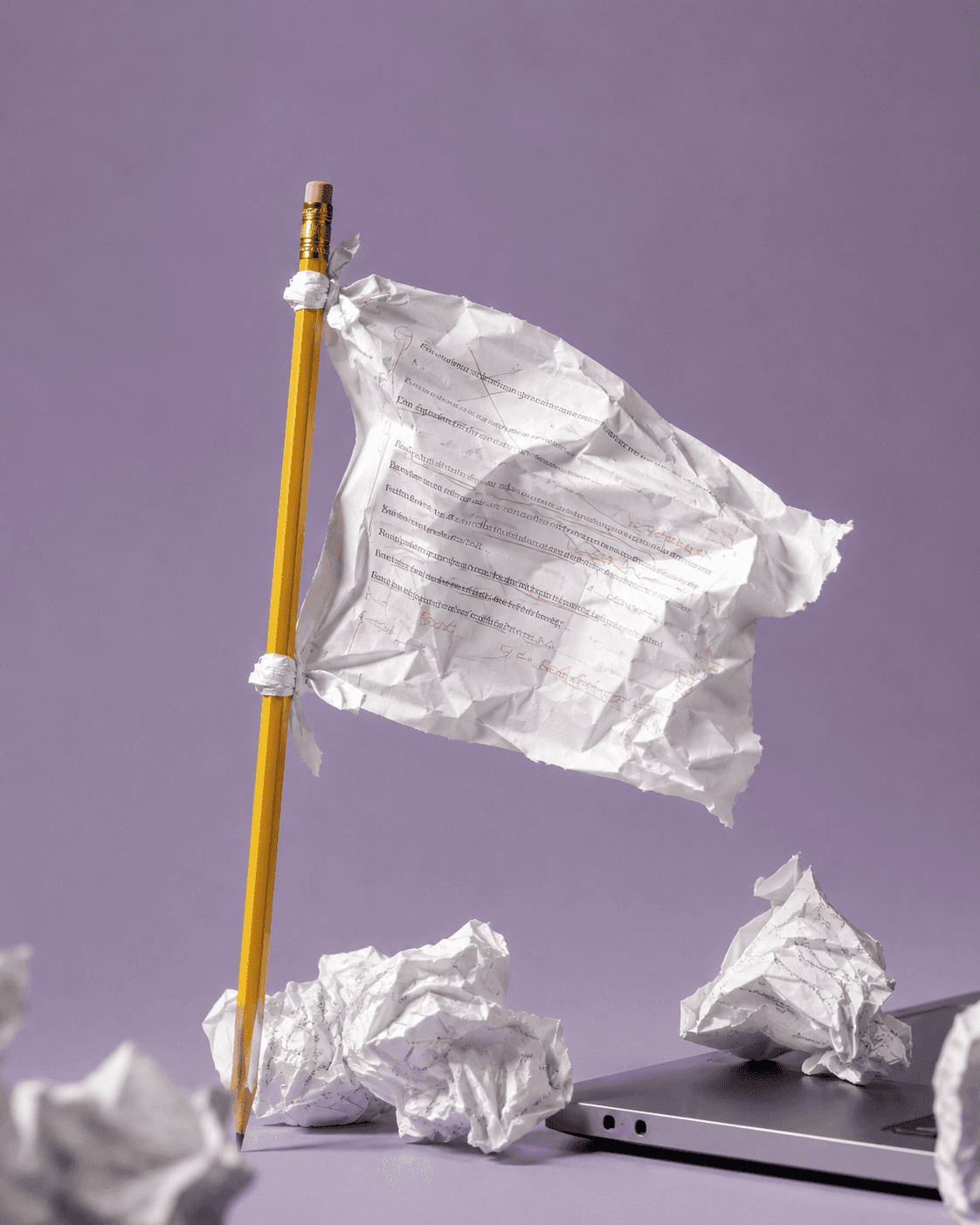
Everyone hates AI until the deadline is tomorrow.
Then the real opinions start.
Share
Copy link